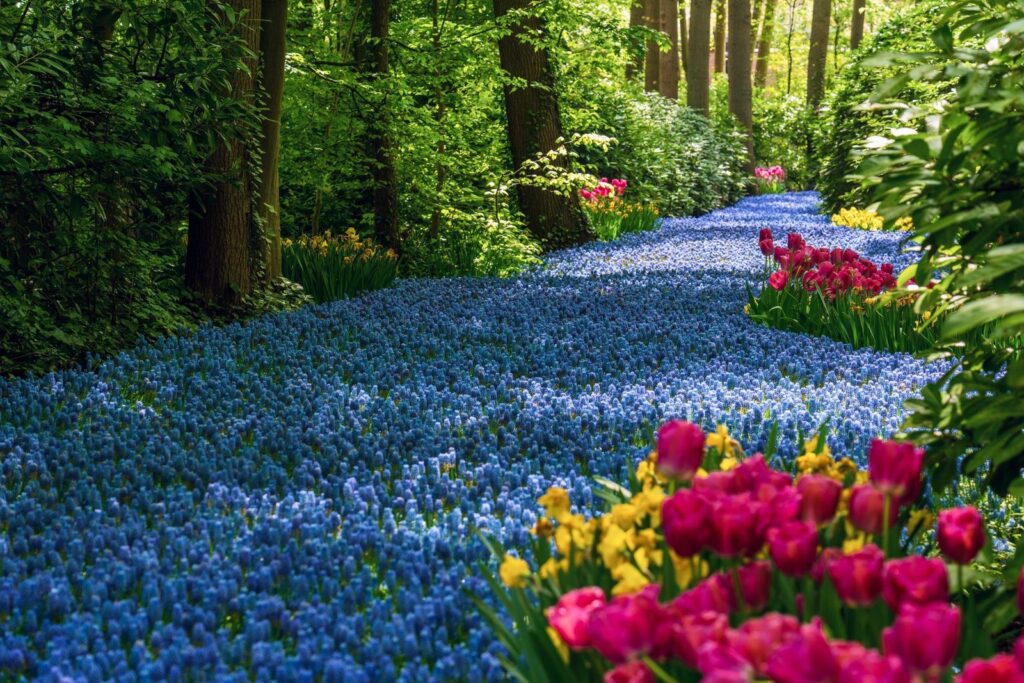
Blue is one of the hardest colors to find in the garden, and gardeners look for it the most. Walk through any garden center in spring and you’ll see tons of pink, red, yellow and white plants, but there’s not much blue to be found. And that makes the occasional forget-me-not or delphinium all the more irresistible.
Here, you’ll find 20 popular blue flowers, complete with names, photos, and care requirements. From simple annuals to perennials that will live for years, there are even some you’d be better off admiring in a botanical garden than trying to cultivate yourself. Each flower features its growing zones, light requirements, and bloom time, making it easy to decide which ones are best for your garden.
Why Blue Flowers Are So Rare
The vast majority of blue flowers get their color from pigments known as anthocyanins, which are based on a chemical called delphinidin. But simply having the pigment is not sufficient. As noted in a review published in the journal Breeding Science, a flower that contains the pigment could still appear purple, mauve or pink, depending on factors like the pH level of the fluid inside the petal cells and the presence of other molecules or metallic ions that help lock in the blue. Additionally, there are numerous families of plants that cannot produce delphinidin in the first place.
This is why so many of the flowers sold as blue are actually blue-violet or lavender. In the following list, a couple of accurate color descriptions like “violet-blue” will help you know what you are getting. For the purest sky blues, look for forget-me-not, cornflower, blue flax, borage, chicory, and plumbago.
Another flower that changes color? Hydrangeas. In acidic soil (pH around 5.5 or lower), bigleaf hydrangeas will be blue because aluminum is accessible to their roots. If your soil is closer to neutral, those same plants will bloom pink. The University of Maryland Extension suggests using sulfur or iron sulfate to decrease the pH instead of aluminum sulfate, since too much of the latter can burn the roots. White varieties of hydrangea, though, will remain white regardless.
20 Blue Flowers With Names and Pictures
The flowers are loosely ordered from easy-to-grow garden staples to more exotic specimens. It’s a useful order for browsing; not a hierarchy.
1. Forget-Me-Not
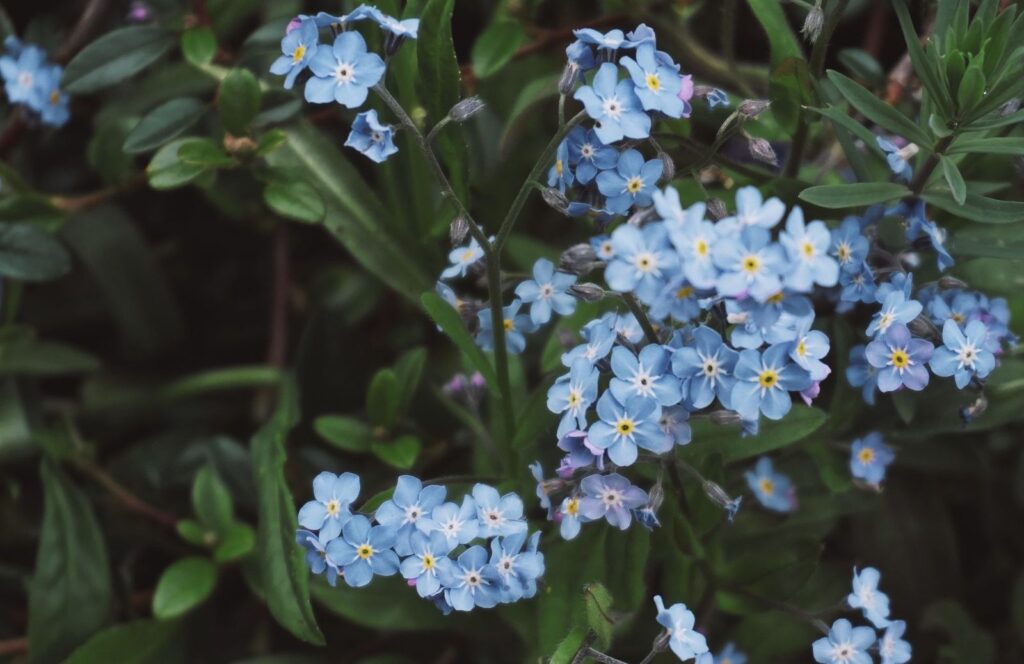
At a glance: Woodland forget-me-not (Myosotis sylvatica). Biennial or short-lived perennial, zones 3–8, full sun to part shade, spring bloom, 6–12 inches tall.
Nothing says spring more than a spread of tiny sky-blue forget-me-nots with yellow eyes. The woodland variety thrives best in moist soil with some afternoon shade in hotter areas, and according to NC State Extension, it self-seeds readily, so one planting often turns into a patch that returns each year on its own.
Go with the woodland variety, not the water forget-me-not (Myosotis scorpioides). The Wisconsin Department of Natural Resources considers the latter a restricted invasive because it escapes water gardens and smothers other plants along streams.
2. Blue Hydrangea
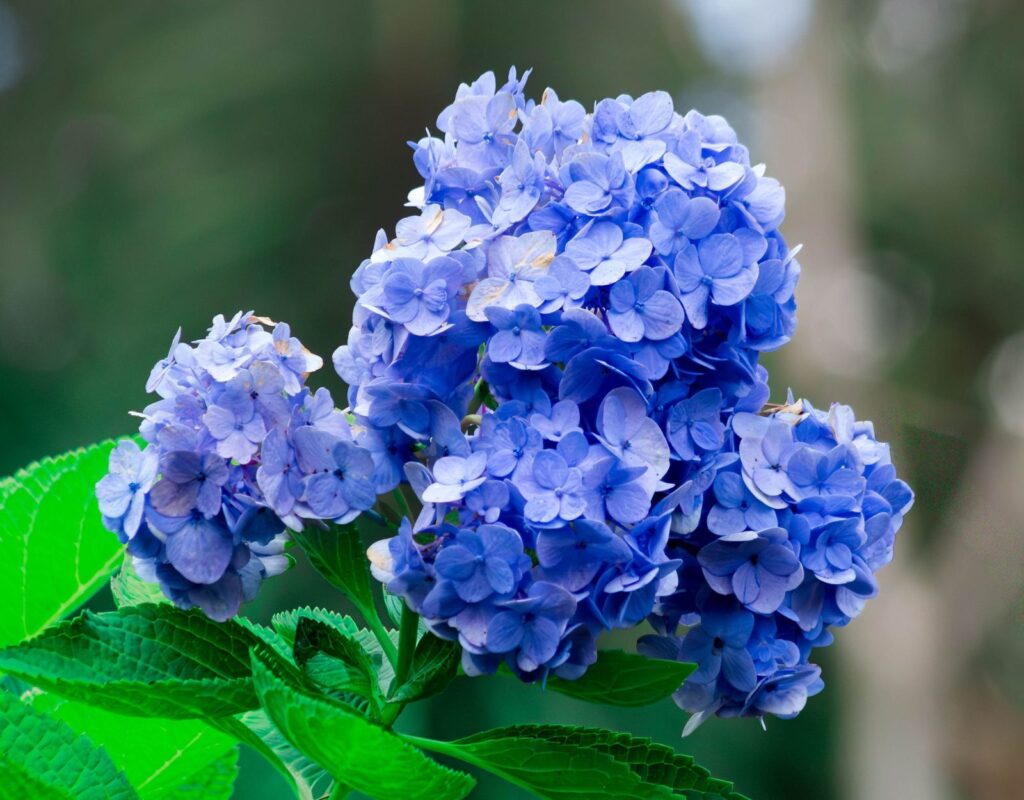
At a glance: Bigleaf hydrangea (Hydrangea macrophylla). Deciduous shrub, roughly zones 6–9, part shade with protection from afternoon sun, early to late summer bloom, 3–6 feet tall.
The big mophead hydrangea is the one most of us visualize when we hear “blue flower.” Its round, blue, deep blue, purple, or pink flowers depend upon soil acidity (see above). Plant in the morning sun with some afternoon shade, and keep watered for at least the first couple of summers.
Most bigleafs flower on last year’s growth, meaning that cutting back too late will cut off the blooms. The NC State Extension recommends pruning before August 1. Oregon State University Extension notes that high-phosphorus fertilizers inhibit the plant’s ability to absorb aluminum, so use a lower-phosphorus fertilizer if you want blue.
3. Plumbago
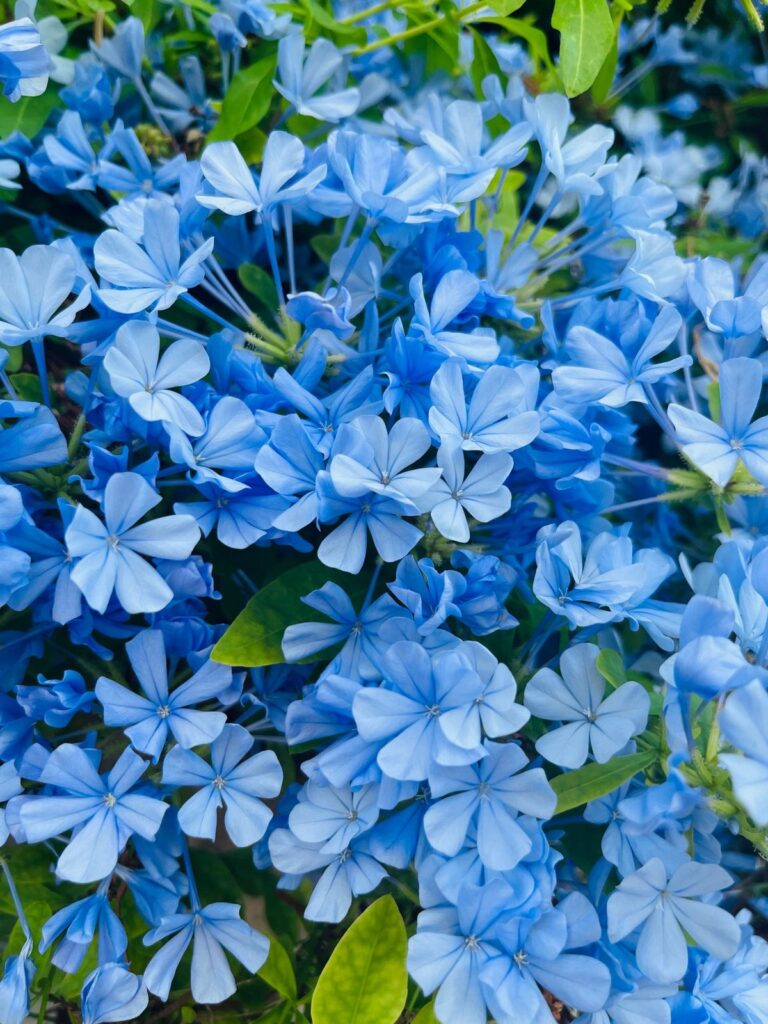
At a glance: Cape plumbago (Plumbago auriculata). Evergreen shrub, zones 9–11, full sun to part shade, summer and fall bloom, 6–15 feet in frost-free areas but much smaller in pots.
Because it is covered with clusters of pale sky-blue flowers for months on end, Plumbago is a fixture of gardens in the South and in California. In more northern climates, grow it as a summer container plant on a sun-filled patio.
The North Carolina State University Extension recommends pruning in late winter. To overwinter in colder climates, move the potted plant indoors to a sunny window before the first frost and reduce watering until spring. Always wear gloves while pruning, as the sap may irritate your skin.
4. Brunnera
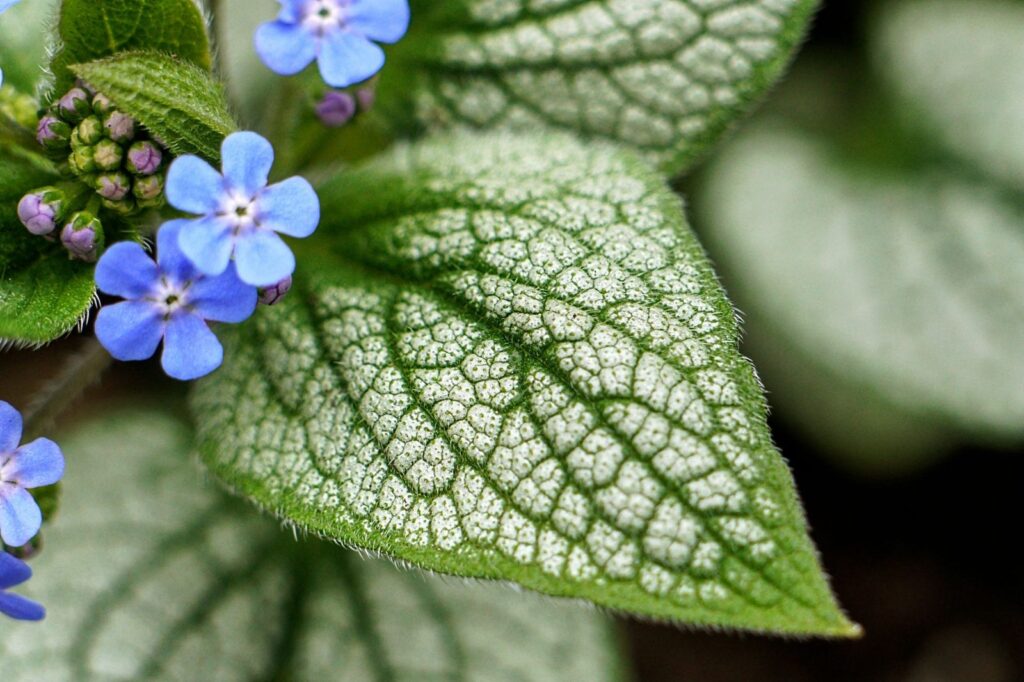
At a glance: Siberian bugloss (Brunnera macrophylla). Perennial, zones 3–8, part to full shade, spring bloom, 12–18 inches tall.
Brunnera is one of those garden plants that’s ideal for shady areas. In springtime you get delicate, airy plumes of bright blue blossoms similar in appearance to forget-me-nots rising above broad, heart-shaped foliage. Varieties with silver leaves extend the brightness of the planting well beyond the flowering season.
Brunnera needs moist, fertile soil and shade from the hottest part of the day, says NC State Extension. The addition of a mulch layer around Brunnera will keep the roots cool. It does well planted under trees or at the side of a shady walkway, mixed in with hostas and ferns.
5. Blue Daisy
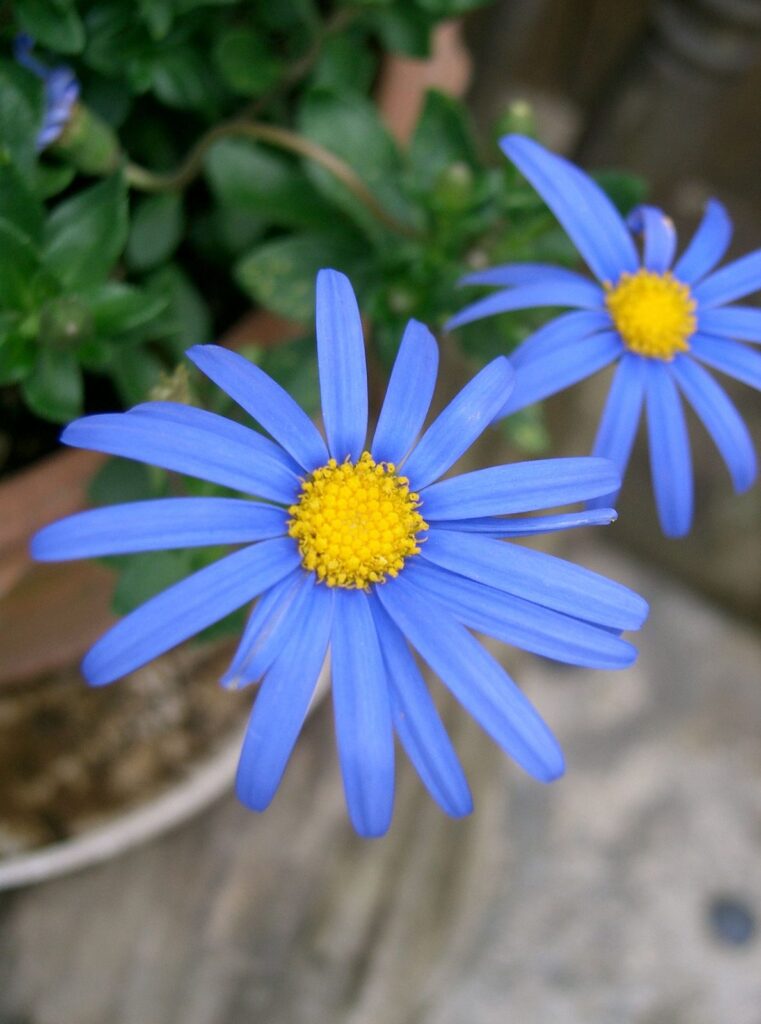

At a glance: Blue marguerite (Felicia amelloides). Tender subshrub grown as an annual outside zones 10–11, full sun, summer bloom, 1–2 feet tall.
The cheerful blue daisy sports sky-blue flowers with a bright yellow center. It is a pretty plant for window boxes or containers. It prefers full sun and a well-drained site since wet roots cause trouble.
During hot, humid summers, it often stops blooming by midsummer. The NC State Extension recommends purchasing seedlings or sowing seeds 6-8 weeks prior to the last frost date in your area to ensure maximum bloom before the heat sets in.
6. Blue Flax
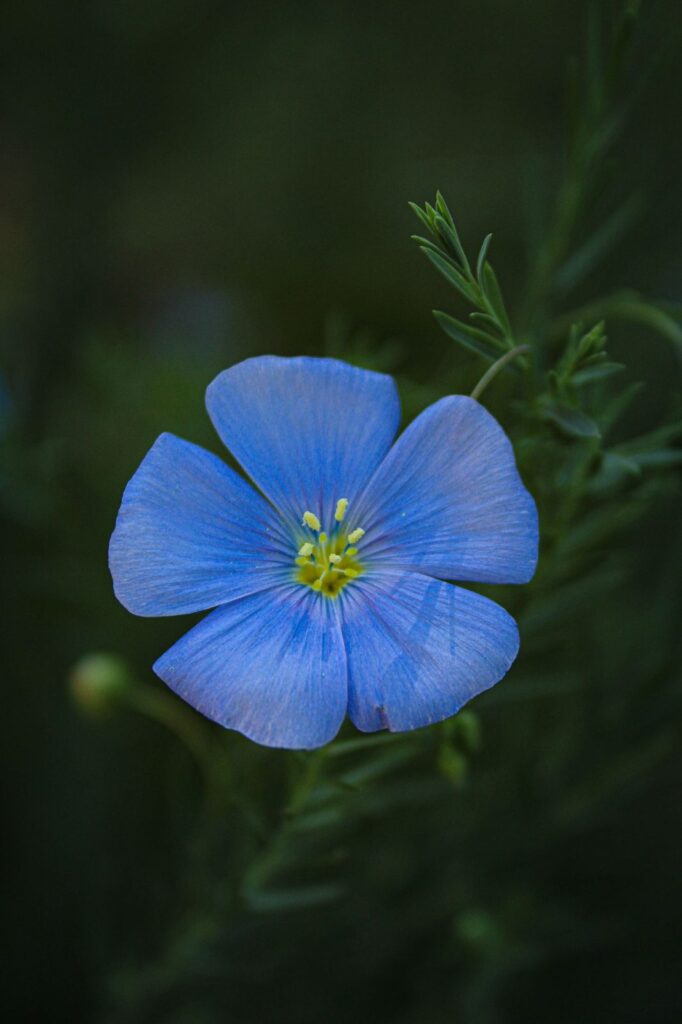
At a glance: Perennial blue flax (Linum perenne) and native Lewis flax (Linum lewisii). Short-lived perennials, zones 4–8, full sun, spring to summer bloom, up to about 2 feet tall.
The delicate blue flax produces some of the most vividly sky-blue flowers you’ll see in the garden, on slender, wiry stalks that dance and tremble in the wind. The blossoms have just one day’s life, as they open at dawn and fall off by dusk, but they are continuously replaced for weeks.
For richer soils that can cause flopping, NC State Extension recommends leaner, well-drained ground, and says to cut plants back to one-half of their size once they have finished blooming. If you are a Western gardener, you might want to try Lewis flax, a native that self-sows readily.
7. Bluestar
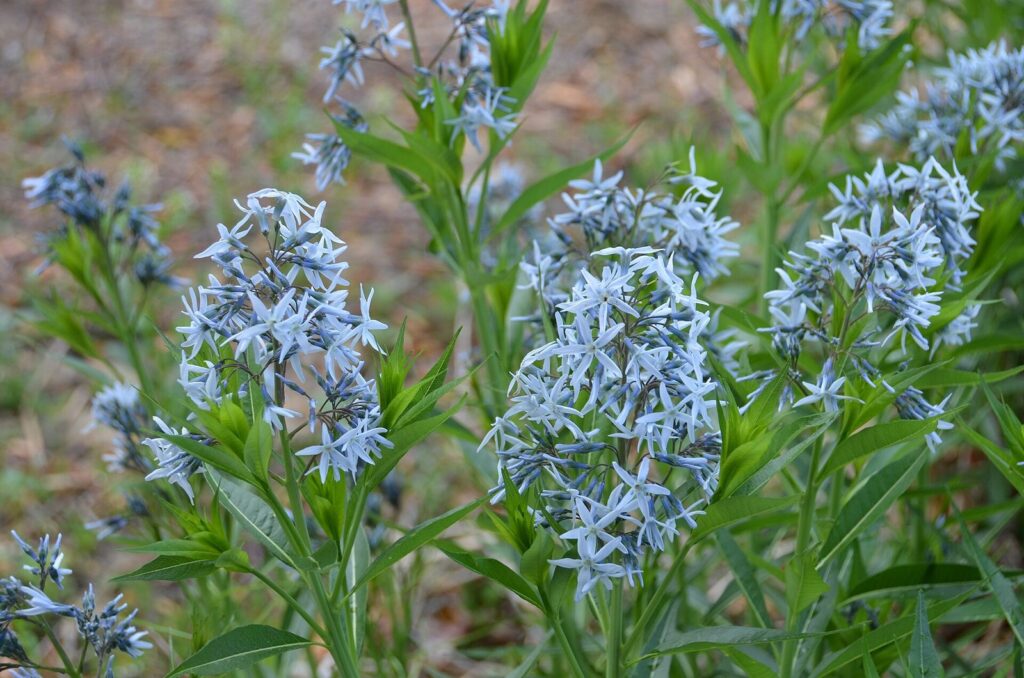

At a glance: Eastern bluestar (Amsonia tabernaemontana) and Arkansas bluestar (Amsonia hubrichtii). Perennials, zones 3–9 and 5–8, full sun to part shade, spring bloom, 2–3 feet tall.
Bluestar’s clusters of tiny star-shaped flowers are a gentle shade of powder blue rather than vivid blue, but this plant makes up for it with deer-resistance, drought tolerance when established, and, in Arkansas bluestar, brilliant golden yellow fall color.
It can get too leggy in deep shade or fertile soil. NC State Extension recommends pruning it after flowering to keep it compact. Arkansas bluestar may take a year or two to become established, so don’t rush the process.
8. Cornflower
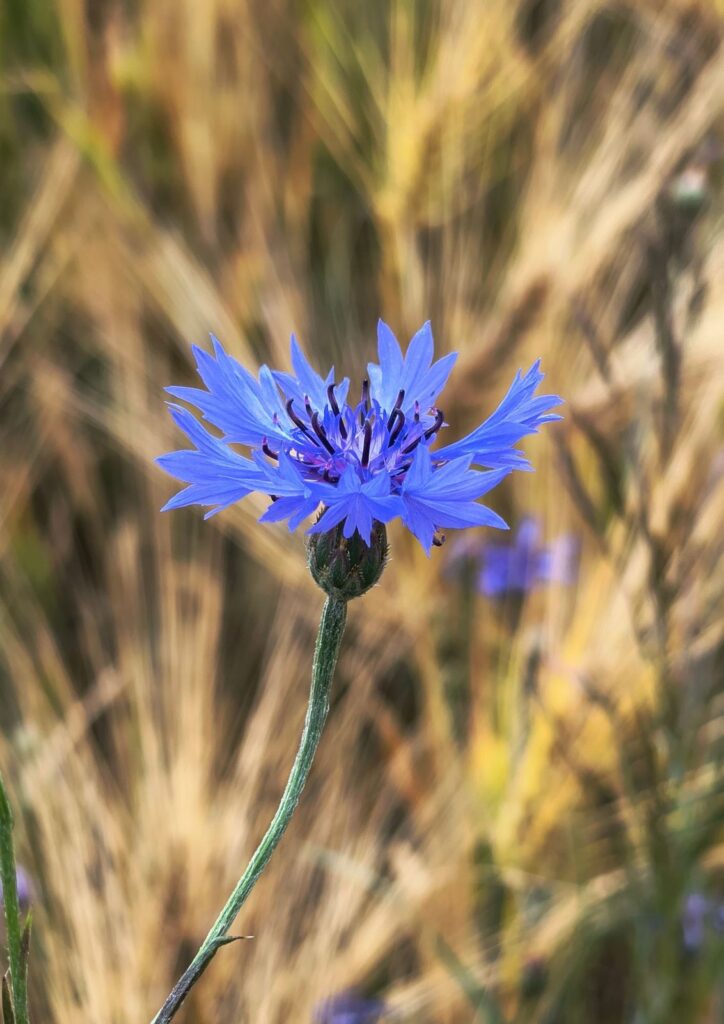
At a glance: Cornflower or bachelor’s button (Centaurea cyanus). Cool-season annual, full sun, late spring to summer bloom, 1–3 feet tall.
It’s called cornflower blue for a reason! These frilly, bright blue blossoms grow easily from seed and make beautiful cut flowers. Plant outdoors in the fall in regions with mild winters, or start seeds indoors 6 to 8 weeks before your last frost date.
The NC State Extension reports that the cornflower re-seeds and can become a weed, which explains its frequent appearance in fields and by the roadside. Deadhead spent flowers to prevent the plant from going rogue.
9. Virginia Bluebells
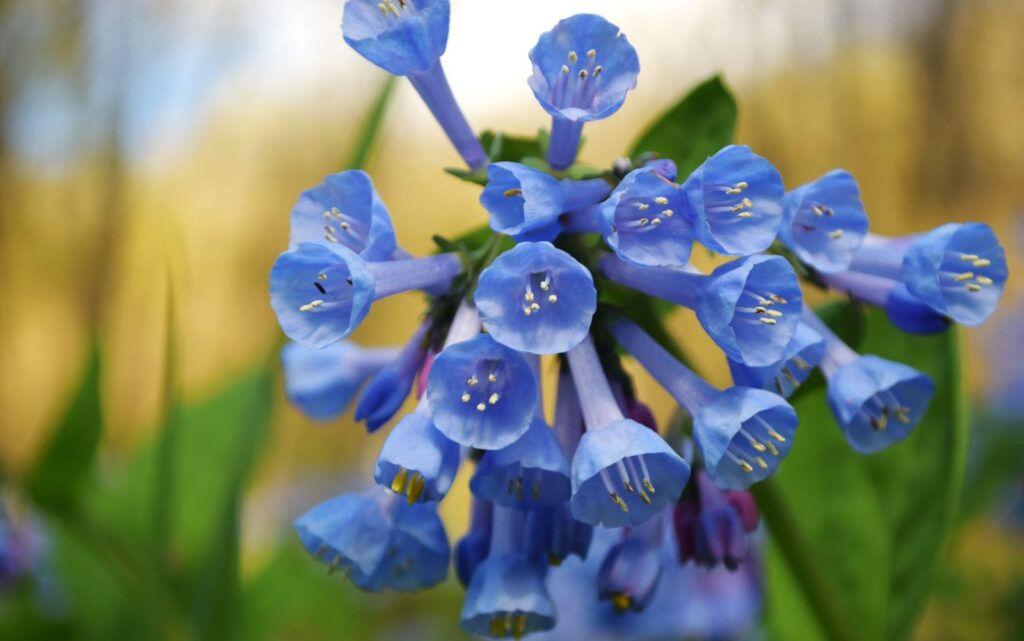
At a glance: Virginia bluebells (Mertensia virginica). Native perennial, zones 3–9, part to full shade, March to May bloom, 1.5–2 feet tall.
In early spring, Virginia bluebells bloom from pink buds into drooping clusters of sky blue bells. The plant is native to much of the eastern United States. It is a spring ephemeral, which means that it blooms for about three weeks and dies down to the ground by midsummer.
According to the NC State Extension website, it’s a good idea to plant them near hostas or ferns, which can occupy the space the bluebells abandon after their bloom. In the Pacific Northwest, though, skip the Spanish bluebells (Hyacinthoides hispanica); they’re considered invasive in the area, according to Washington State University’s plant database.
10. Lobelia
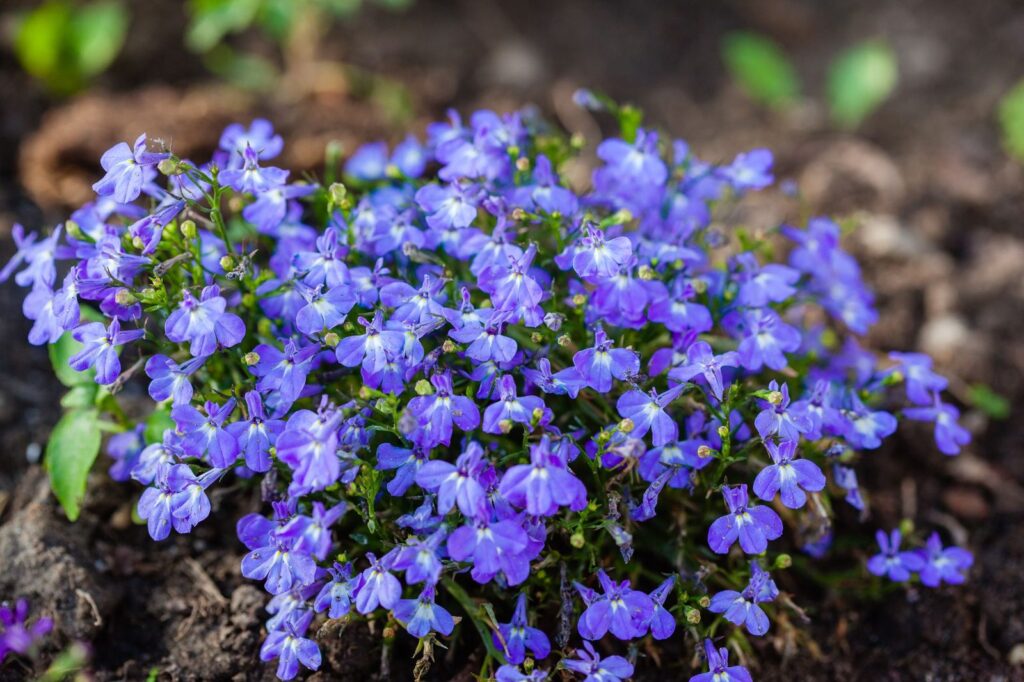
At a glance: Edging lobelia (Lobelia erinus), grown as an annual, and great blue lobelia (Lobelia siphilitica), a native perennial for zones 4–9. Full sun to part shade, late spring to early fall bloom depending on type.
Edging lobelia is a profusion of tiny violet-blue flowers growing in short clumps. They look fantastic cascading from pots or hanging baskets. Keep them well watered and regularly fertilized. NC State Extension says they often decline when temperatures get high.
Or you can go with something that comes back every year, like great blue lobelia, which reaches about 1.5 to 4 feet in height and has flowers from midsummer to early fall. Lobelia likes moist soil and therefore does well in rain gardens, plus it’s popular with pollinators.
11. Morning Glory
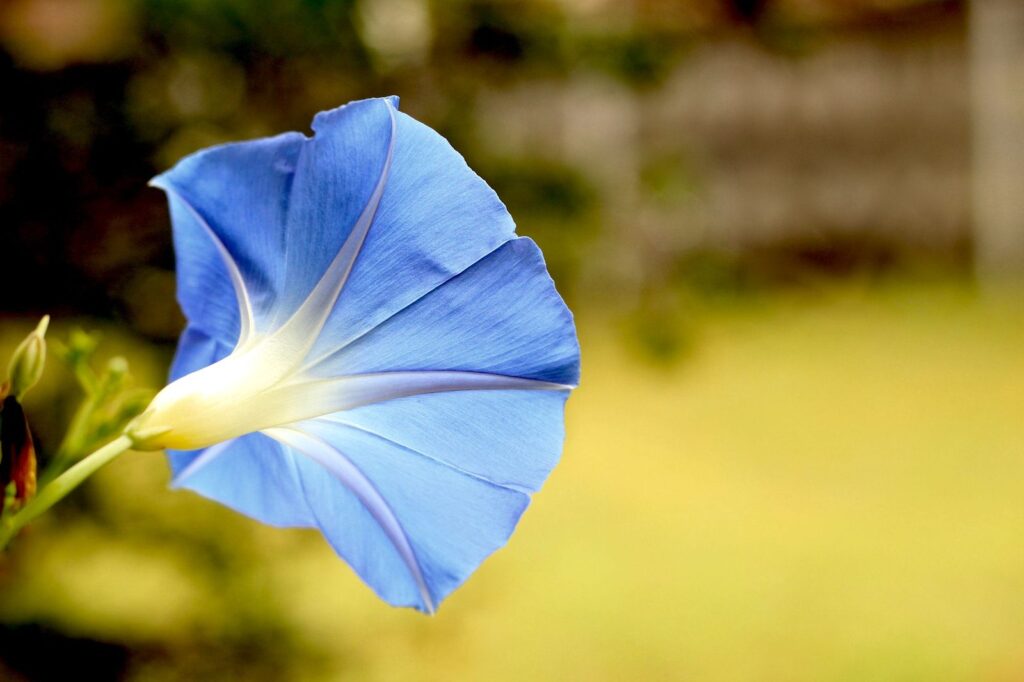
At a glance: Morning glory ‘Heavenly Blue’ (Ipomoea tricolor). Annual vine, full sun, summer to fall bloom, vines 8–10 feet long.
In the morning, ‘Heavenly Blue’ morning glory unfurls sky-blue trumpets with white throats that close again by evening. The blue is a chemical sleight of hand: when scientists measured the pH of the inside of the petals they noticed that, as each flower opened, the level rose. That caused the color to shift from purple to blue.
Nick the hard seed coat and soak the seeds overnight before planting, then provide a trellis or fence for them to climb. NC State Extension warns that morning glory reseeds itself and can be weedy, and is classified as a noxious weed in some regions of the U.S., so check your state’s regulations first.
12. Blue Salvia
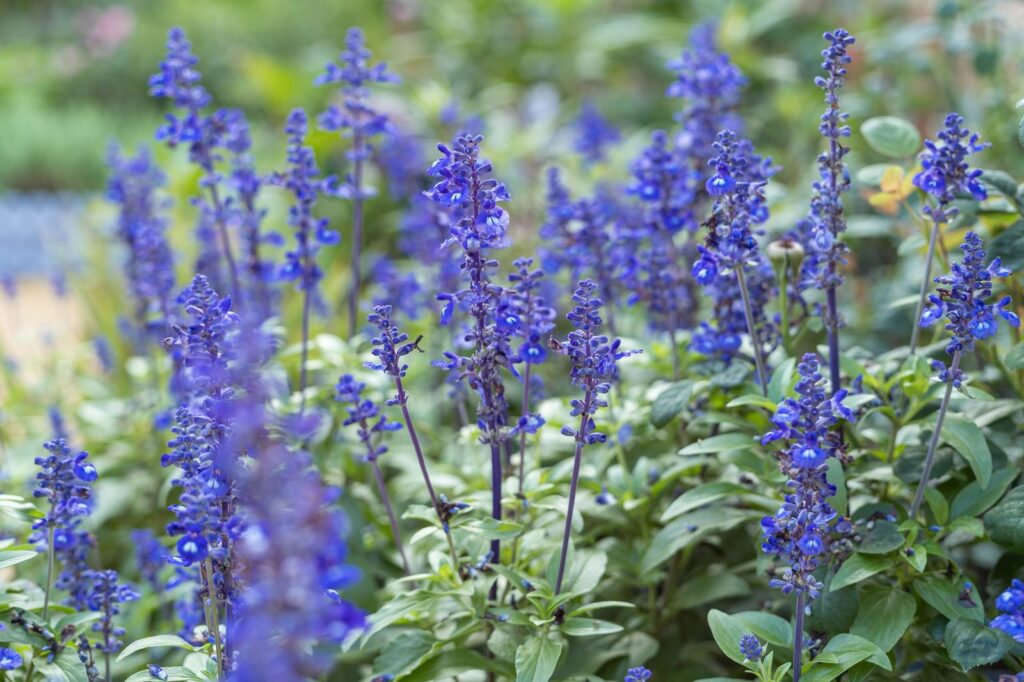
At a glance: Mealycup sage (Salvia farinacea). Tender perennial grown as an annual outside zones 8–10, full sun, spring through fall bloom, 1.5–3 feet tall.
Slender spikes of violet-blue flowers rise from late spring until frost in blue salvia, a perennial that ignores heat, drought, clay, and deer. Native to Texas and the south-central U.S., it tolerates hot summer heat much better than most blue flowering plants.
According to NC State Extension, cutting the plants back after a long flush of bloom will keep the plants compact and flowering. It is best planted in groups for the strongest color effect in beds and borders.
13. Borage
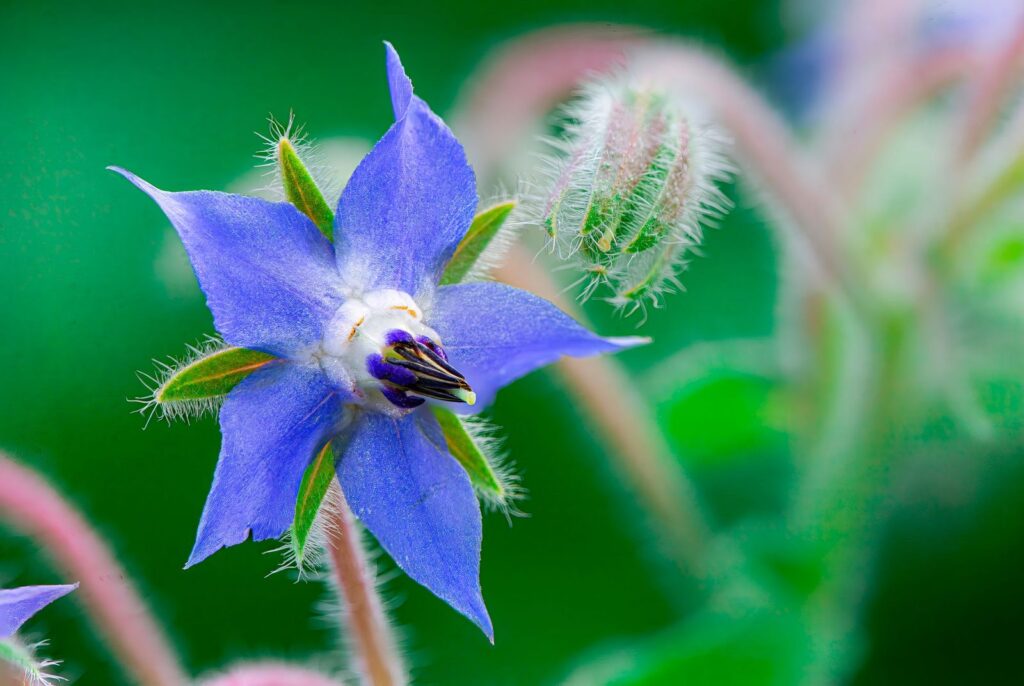
At a glance: Borage or starflower (Borago officinalis). Annual herb, full sun to light shade, summer to fall bloom, about 1.5–3 feet tall.
Borage is a favorite in herb gardens. It has pretty, star-shaped blue flowers that nod on stalks above the plant’s fuzzy, slightly cucumber-flavored leaves. It doesn’t need good soil, and bees love it.
According to NC State Extension, borage reseeds and will come back every year. In midsummer, cut back the plants by half to stimulate new growth and a fall bloom.
14. Chicory
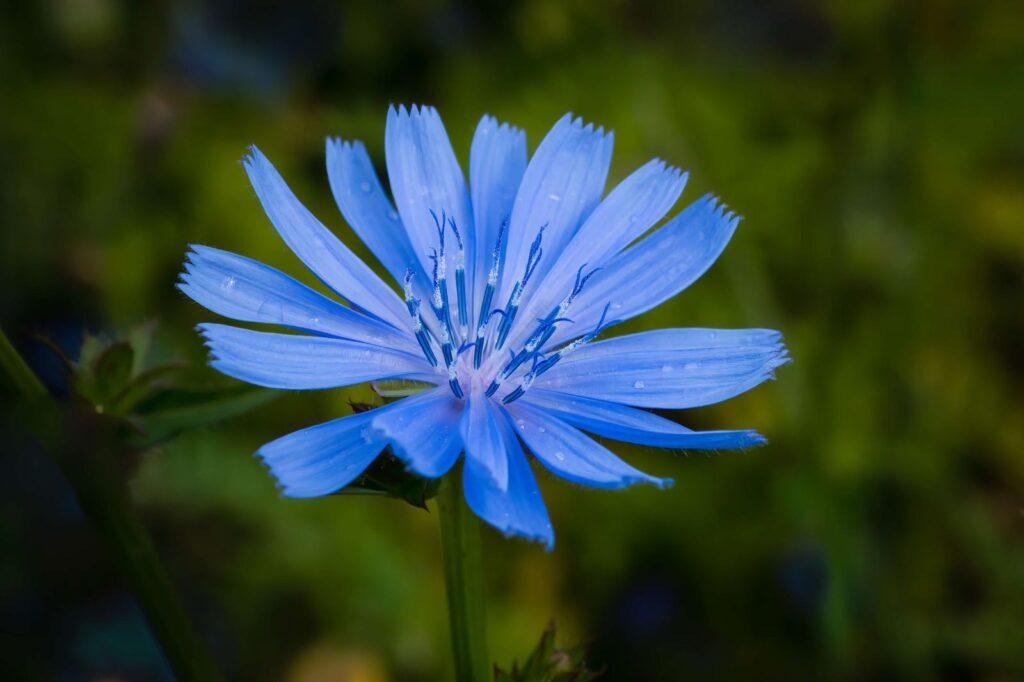
At a glance: Chicory (Cichorium intybus). Biennial or short-lived perennial, zones 3–8, full sun, summer to fall bloom, 2–4 feet tall.
If you’ve traveled in the summertime, you’ve likely noticed the brilliant blue flowers of chicory on the side of the road. Chicory is a native of Europe that has spread across the U.S. Its fringed petals offer some of the purest blues you’ll see in the wild.
It prefers cool weather and well-drained soil, and doesn’t do well in the heat of the South. NC State Extension says it’s weedy and considered invasive in some states, so you’d be better off enjoying it in a meadow or along a country road rather than planting it in a neat border.
15. Delphinium
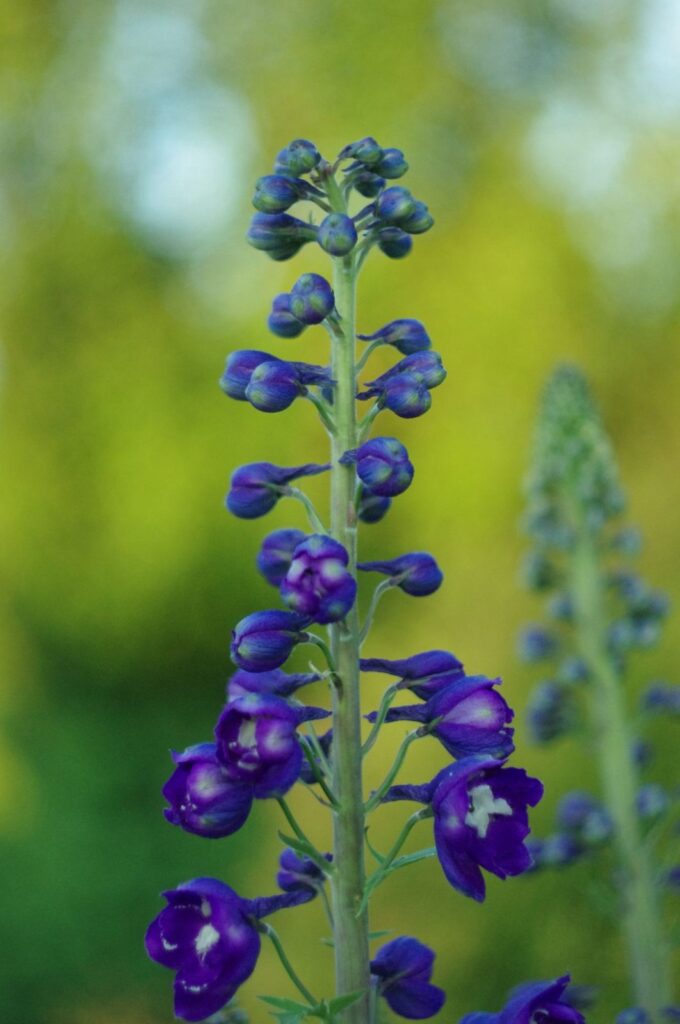
At a glance: Garden delphinium (Delphinium elatum hybrids). Short-lived perennial, zones 3–7, full sun with afternoon shade in hot areas, late spring to midsummer bloom, 3–6 feet tall.
Few flowers can top the height and drama of delphinium. Towering flower spikes of blue, violet or white appear above the garden early in summer. This is another cottage garden favorite that works well in cool-summer regions.
They’re high-maintenance, says NC State Extension. Staking the stems early, protecting them from wind, and cutting back spent flower spikes to the leaves will promote a second crop of flowers later in the summer. Delphiniums don’t thrive in hot, humid summers.
16. Gentian
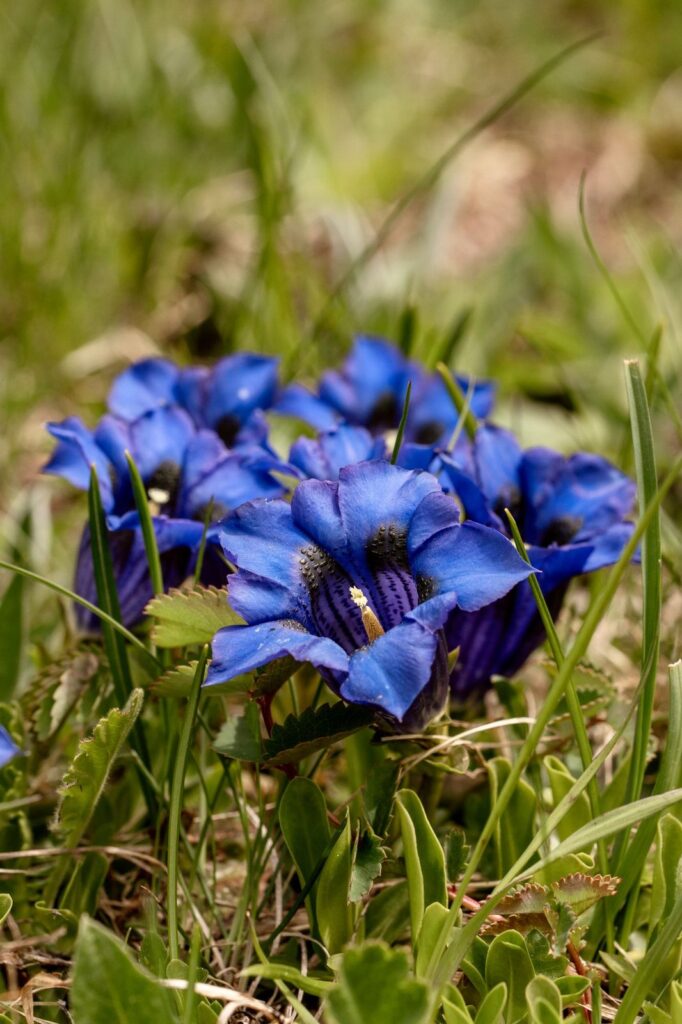
At a glance: Bottle gentian (Gentiana andrewsii). Native perennial, roughly zones 3–7, sun to part shade, August to October bloom, about 1–2 feet tall.
Some of the bluest colors in the plant kingdom come from gentians. While many of these are alpine plants that won’t grow well in most ordinary gardens, bottle gentian (a North American native) is more tolerant. Its blooms never fully open, and bumblebees push their way through to get at the nectar.
The USDA Forest Service considers it the easiest gentian to cultivate in wet wildflower gardens. It can be planted in damp, fertile soil around a pond or in a depression, where its late summer blue is much appreciated as many other plants in the garden are dying back.
17. Himalayan Blue Poppy
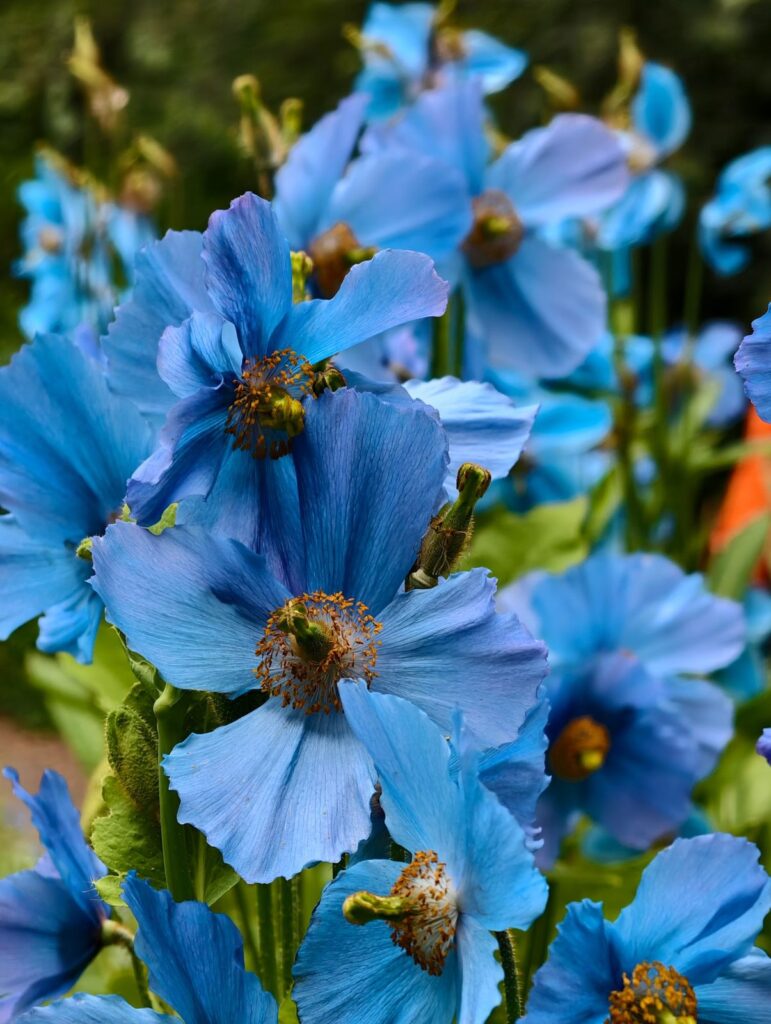
At a glance: Himalayan blue poppy (Meconopsis betonicifolia and hybrids). Short-lived perennial, about zones 5–7 in cool-summer areas only, part shade, June to July bloom, 3–4 feet tall.
Silky sky-blue petals surround the golden stamens of the Himalayan blue poppy, which is notoriously hard to grow. Many don’t survive their first bloom and they require cool, moist, well-draining acidic soil.
The Missouri Botanical Garden says it needs summers mostly below 80°F and rates it difficult to grow. For most gardeners in the U.S., unless you live in the Pacific Northwest, coastal New England, or high in the mountains, it’s a flower to enjoy at a public garden.
18. Blue Orchid
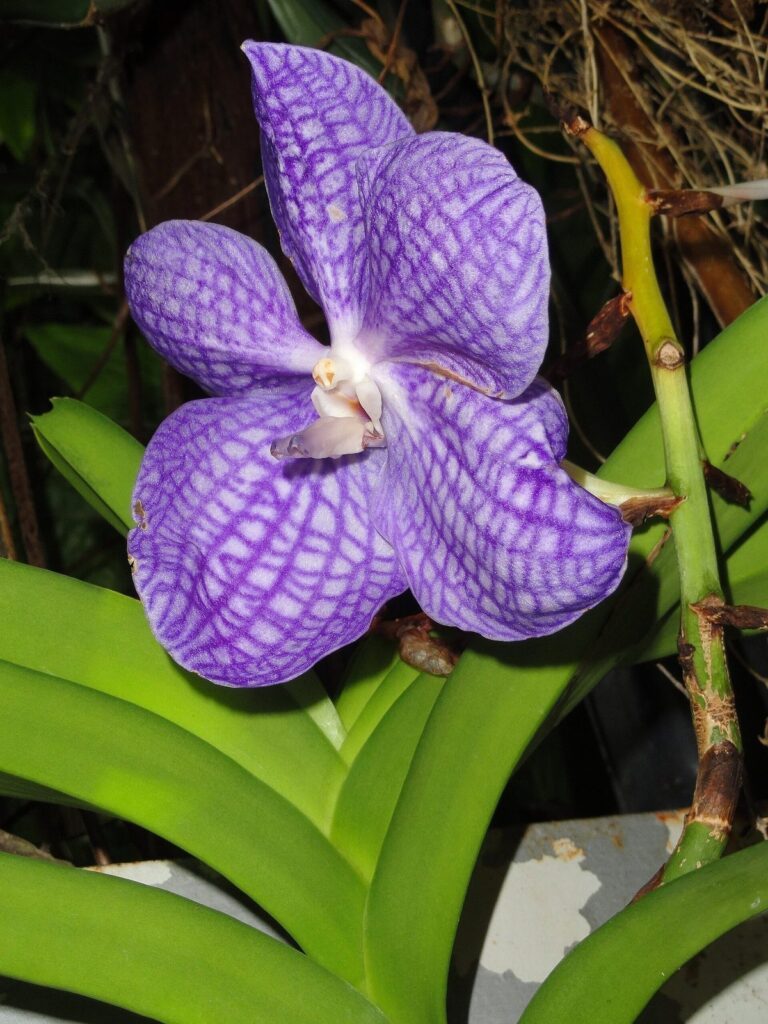

At a glance: Blue vanda (Vanda coerulea). Tropical orchid, needs high light and cool nights, blooms blue-violet.
You may have seen some beautiful bright blue moth orchids at the grocery store. Well, they were dyed. Iowa State University Extension explains that a dye is injected into the flower stem. And when the plant blooms again, the flowers are white again.
The closest thing you’ll find to a naturally blue orchid is the blue vanda, described by Kew Gardens as “vivid blue” although many growers see it as blue-violet. It likes bright light and cool nights, so it won’t thrive in most home windows.
19. Blue Passionflower
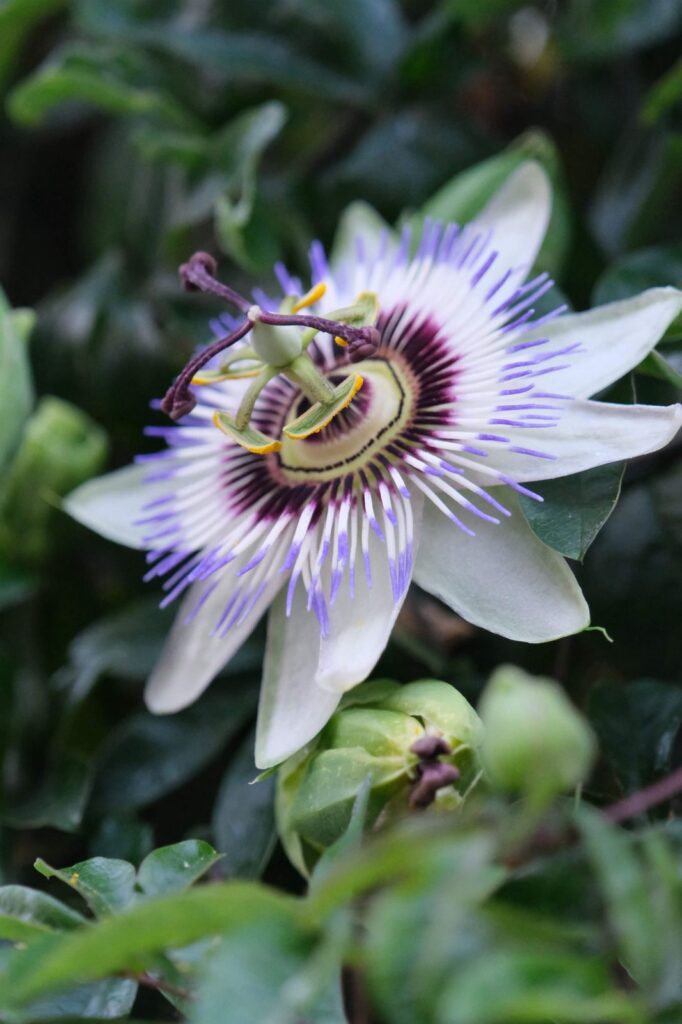
At a glance: Blue passionflower (Passiflora caerulea). Perennial vine, zones 7–10 for reliable blooms, full sun to part shade, early summer to early fall bloom, 10–40 feet in warm climates.
The blue passionflower is almost too beautiful to be true, its flowers having white petals with a crown of blue, white, and purple filaments encircling the flower’s center. Orange fruits follow the flowers. The vine grows rapidly and will need a strong fence or trellis for support.
The NC State Extension recommends pruning off half the current year’s growth after bloom to prevent the plant from becoming too vigorous. It may endure winters as hardy as USDA Zone 6, though the Flora of North America says it probably will not bloom there. The plant also propagates by root suckers, so leave space for its underground expansion.
20. Blue Iris
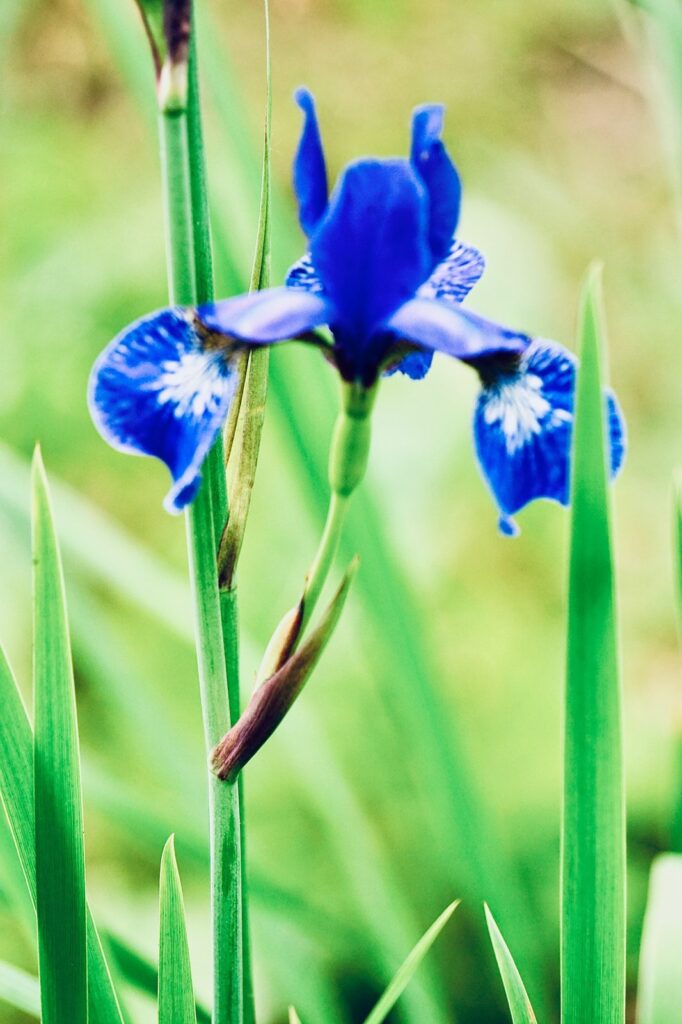
At a glance: Siberian iris (Iris sibirica) and tall bearded iris (Iris germanica hybrids). Perennials, zones 3–8, full sun, late spring to early summer bloom, 2–4 feet tall.
The irises are nearly a rainbow in their colors, but some of the prettiest of all are the blue and violet-blue ones. The Siberian iris has narrow, grassy foliage and delicate blooms. It prefers constantly moist soil and can be divided every few years when flower production declines.
Bearded iris wants the opposite, good drainage and sun on its fat rhizomes. The NC State Extension recommends placing the rhizome so the top third of it is exposed, and not allowing any mulch to touch it. Divide crowded clumps in late summer.
Picking Blue Flowers for Sun, Shade, and Pots
For yards that get little or no sun, brunnera, Virginia bluebells, and woodland forget-me-nots are great choices. They flower in early spring when leaves have not yet emerged on the trees and they do best in consistently moist soil. Bigleaf hydrangea is also suitable for shade if it gets at least a few hours of direct morning light, which will help it bloom. Great blue lobelia and bottle gentian both grow well in part shade, prefer moist soil, and add blue color to the garden in late summer.
Sunny and dry beds require a different selection of plants. Blue salvia, blue flax, bluestar, and bearded iris are all sun and good drainage lovers and will sulk in wet areas. Cornflower and borage grow rapidly from seed in the full sun and will tolerate relatively poor soils. Delphinium too likes the sun, but requires richer soil, regular watering, and cooler summers than the others on the list.
Containers will expand your garden list further. Plumbago, blue daisy, and edging lobelia are all tender plants in most parts of the country, so you can enjoy them in pots for a season and then move them to a sheltered spot when a frost is predicted. A big pot with a trellis will grow morning glory, and blue passionflower can be grown in a large container in zones where you’d move it into a garage or sunroom over the winter. For whatever you do grow in pots, give them more water than you would in the ground, as containers dry out faster in the hot summer weather.
How to Design With Blue Flowers
Blue is a color that tends to retreat into the background. It can appear much darker and more distant than it actually is, especially in shadow or at twilight. When using blue flowers, plant them in large swaths instead of individually here and there; position them so you get to experience their color up close, such as lining a walkway, framing a patio seat, or arranging in pots by your front door.
If you’re looking for bright color combinations, try combining blue with yellow or orange. A striking example of this combination is blue salvia planted near marigolds or black-eyed Susans. For something softer, try blue paired with white, silvery foliage, and light pinks. Both the silver leaves of Brunnera and white hydrangeas will enhance blue flowers.
And consider the calendar, as well. Virginia bluebells, forget-me-nots and brunnera enliven spring. Delphinium, cornflower and hydrangea bear into early summer. Blue salvia and plumbago sustain the long, hot days, and bottle gentian and great blue lobelia bring the summer season to a close in late summer and fall.
Your Next Steps
Begin by looking up your hardiness zone and learning how much sunlight your chosen area receives. Then, select two or three flowers from this list that are appropriate for your zone. To get immediate color for this year’s garden, plant cornflower, borage or morning glory by seed. For color that returns every year, try a perennial like brunnera, bluestar, Siberian iris or blue salvia (in warmer areas). Keep track of their bloom time and next year, you’ll be able to fill in any blank spots so there’s some blue in your garden from spring to fall.
Sources and Further Reading
- NC State Extension Gardener Plant Toolbox
- Breeding Science: Blue flower color development (review)
- University of Maryland Extension: Hydrangea problems and flower color
- Oregon State University Extension: General care of hydrangeas
- USDA Forest Service: Bottle gentian
- Missouri Botanical Garden: Himalayan blue poppy
- Iowa State University Extension: How are blue orchids made?
Featured photo: Susanne Jutzeler, suju-foto / Pexels (Pexels License)